Household appliances
Drying cabinet myths: what is true and what is not?
Koen van Viegen ·
Expensive to run, slow, stiff washing and a hole in the wall? Stubborn myths about the drying cabinet are still doing the rounds. Here is the honest answer to each one, with the numbers.
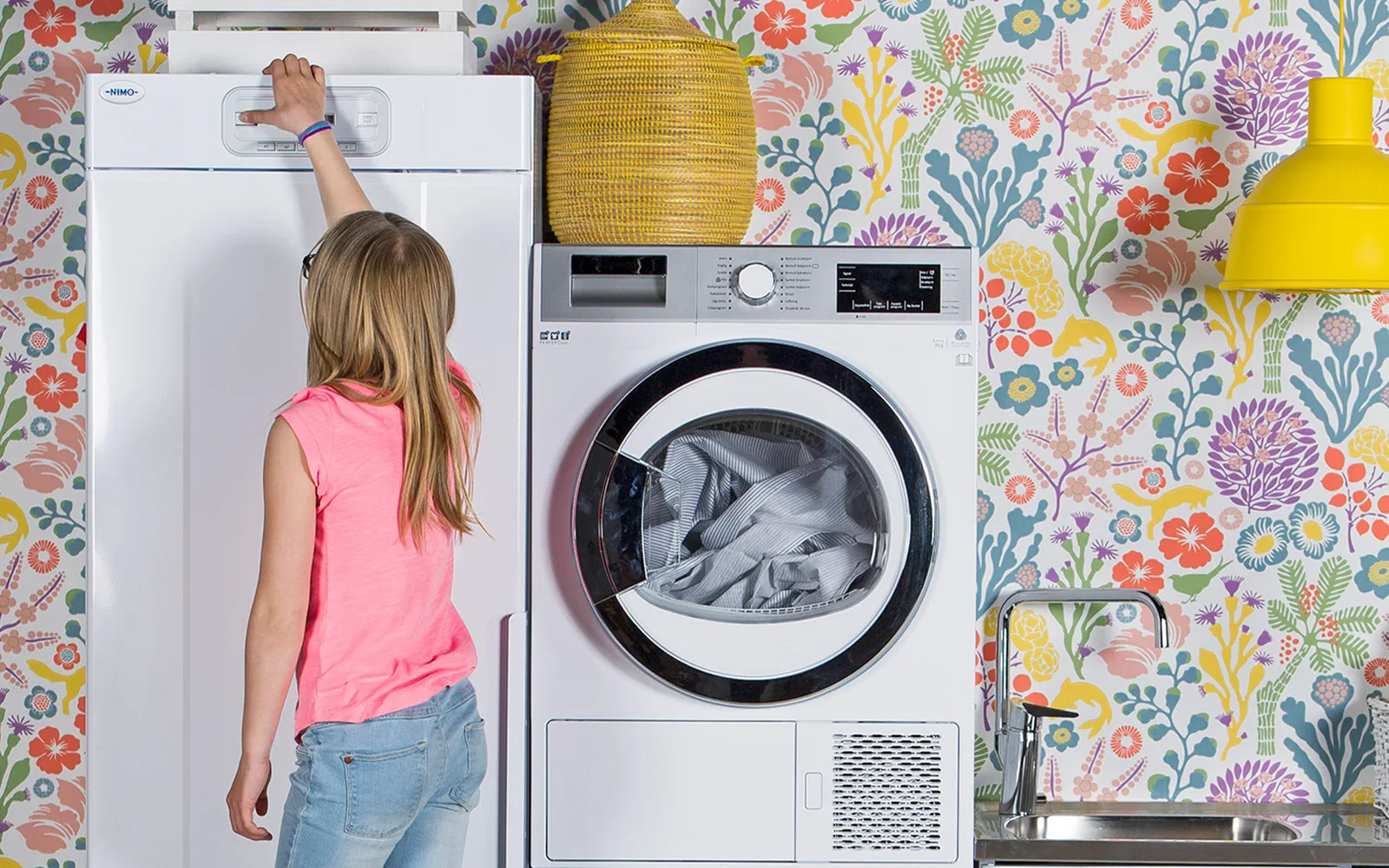
A drying cabinet is a cabinet in which you dry your washing hanging up, with warm air. Yet many people still picture the noisy, steaming one from the school gym. Modern drying cabinets are quiet, efficient and switch themselves off. Below, for each myth, what is true and what is not.
Myth 1: a drying cabinet uses a lot of electricity
Not true. The NIMO Passad 60 with a heat pump dries 4 kg of washing with 0.84 kWh. A full 11 kg cabinet takes 2.31 kWh, so at €0.30 per kWh about 70 cents. A tumble dryer uses about 1.40 kWh per cycle on average, a figure used by APPLiA and the European Commission.
Energy use per cycle (4 kg of laundry)
- Passad 60: 0.84 kWh (heat pump)
- Tumble dryer (average): 1.4 kWh
- Solano DC 60: 2.56 kWh (sensor, vented)
- Mistral DC 60: 2.76 kWh (timer, vented)
- Old drying cabinet: 6 kWh
At €0.30 per kWh the Passad 60 costs about 25 cents per cycle.
The image of an energy guzzler comes from old cabinets. A drying cabinet that is twenty years old or more can use up to 6 kWh per cycle. A cabinet with a sensor saves 40 to 85% compared with a traditional cabinet with a timer, because it stops as soon as the washing is dry.
| Load | Drying time | Energy use |
|---|---|---|
| Passad 60, 4 kg | 85 minutes | 0.84 kWh |
| Passad 60, 11 kg | 240 minutes | 2.31 kWh |
| Tumble dryer, average per cycle | Varies by programme | approx. 1.40 kWh |
Myth 2: drying in a drying cabinet takes much longer than in a tumble dryer
Not true. In the Passad 60, 4 kg of washing is dry in 85 minutes, about as fast as in a tumble dryer. A full 11 kg cabinet takes 240 minutes, but that is also more than fits in most drums.
The difference is in what happens next. Dry washing in a tumble dryer creases if you leave it. In a drying cabinet the washing simply keeps hanging, so you take it out whenever it suits you.
Myth 3: clothes go stiff in a drying cabinet
Not true. Stiff washing is mostly caused by over-drying. A drying cabinet with a sensor measures the moisture and stops in time, so the fabric keeps the right residual moisture. That also prevents static and fibres that break more easily.
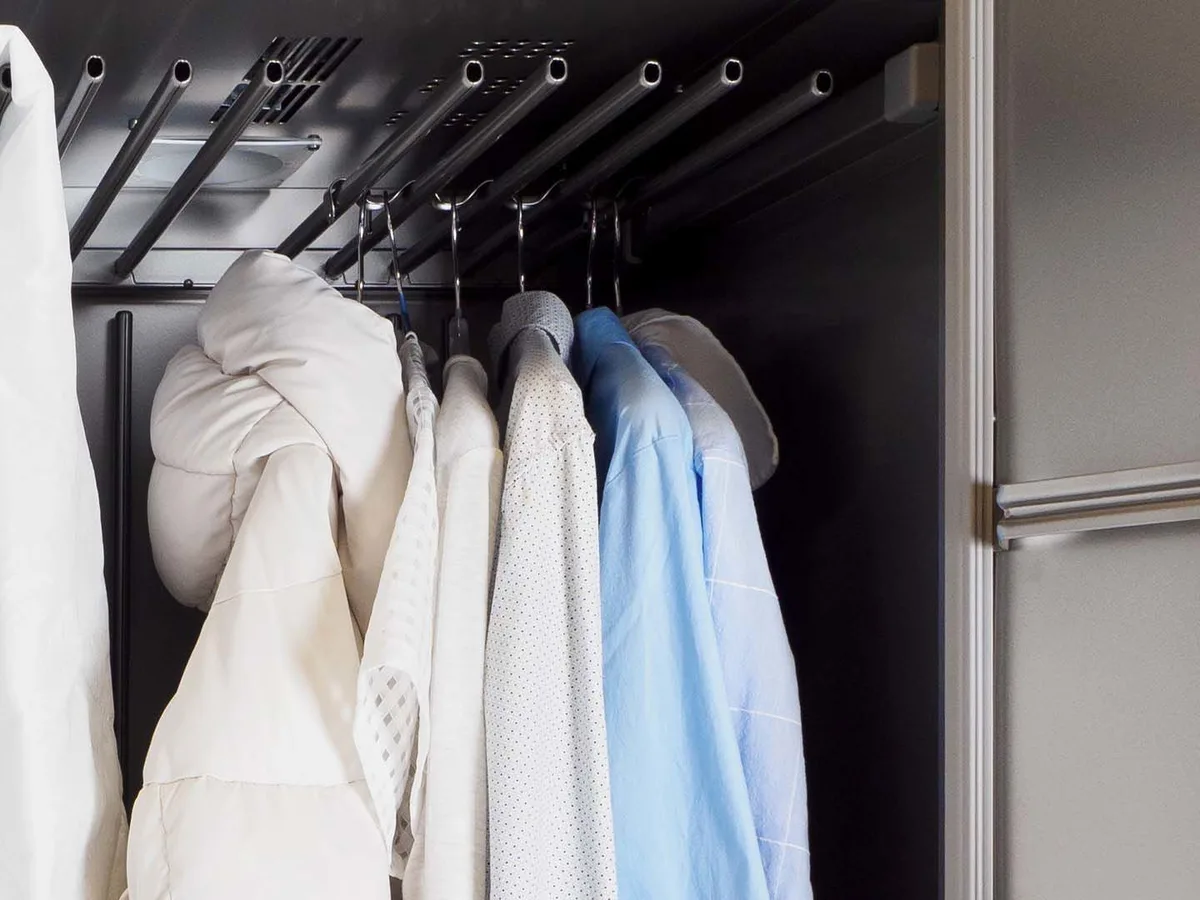
In the Passad 60 you choose between iron dry and cupboard dry. You take shirts out iron dry and let towels go cupboard dry. Because the washing hangs, it creases less too.
Myth 4: a drying cabinet needs a vent to the outside
Partly true. A vented drying cabinet, such as the Solano DC 60 or Mistral DC 60, sends the humid air through a hose to the outside or into the ventilation. A heat pump drying cabinet does not need that.
The Passad 60 works in a closed system: the heat pump takes the moisture out of the air and turns it into water. All you need is a plug socket. Read more in our article on the heat pump drying cabinet without a vent.
Myth 5: a drying cabinet makes the room damp
Not true. It is an airer indoors that makes the room damp. All the water from wet washing has to go somewhere, and otherwise it condenses on cold surfaces such as windows and outside walls. A drying cabinet captures that moisture.
In a heat pump drying cabinet the moisture goes as water into a tank or down the drain. In a vented cabinet the humid air goes through the hose to the outside. So your indoor climate stays dry.
Myth 6: a drying cabinet is only for wet outdoor clothing
Not true. A drying cabinet dries everything: everyday washing, bedding, towels, sportswear and shoes. Wet and dirty outdoor clothing can go in too. Once it is dry, the dirt brushes off easily and you need to wash the jacket less often, so it stays water-repellent for longer.
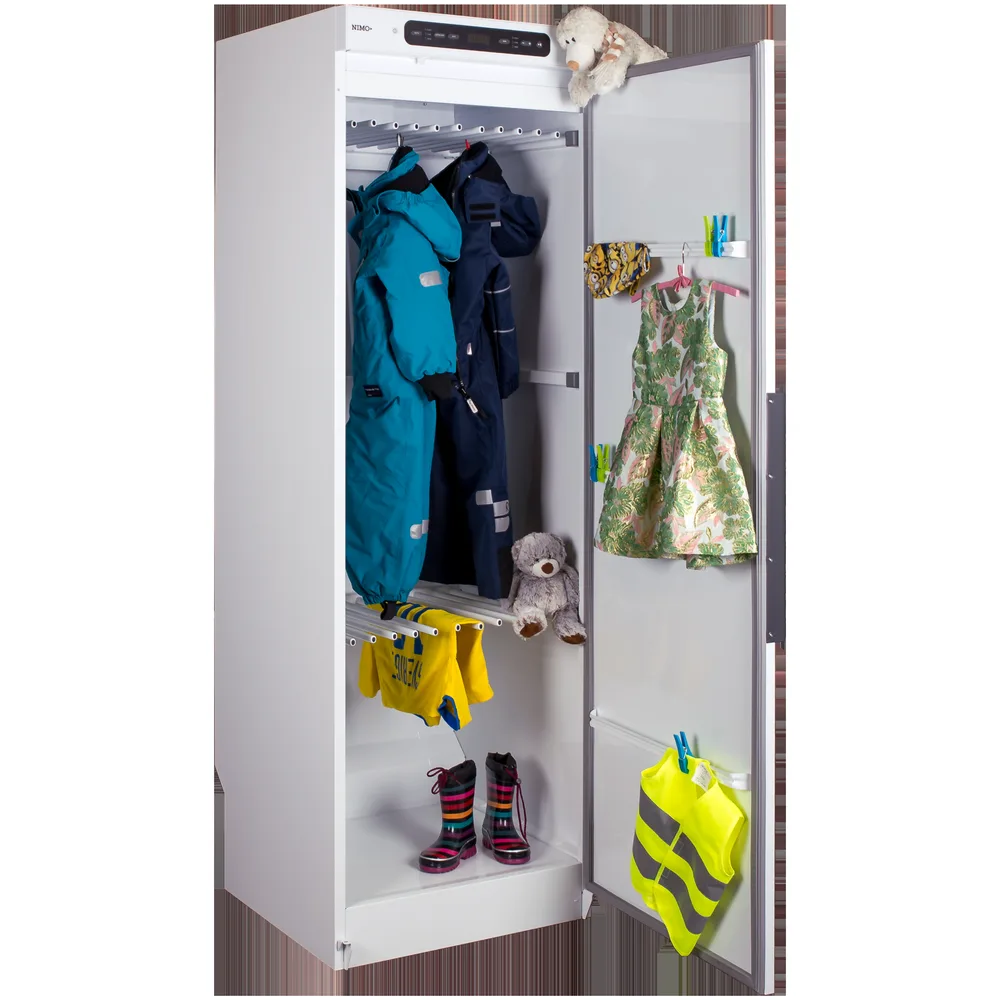
A drying cabinet with a footprint of less than half a square metre holds up to 16 metres of washing line. That is a full wash, without airers all over the house.
Myth 7: a drying cabinet kills nothing and is not hygienic
Not true. In 2021 the Swedish research institute RISE tested the Easy Dryer 1900, now the Mistral DC 60. In normal use, at a temperature of 55 °C or more and a drying time of more than 100 minutes, viruses such as SARS-CoV-2 and norovirus are inactivated. An inactivated virus can no longer cause an infection.
On top of that, the faster washing dries, the less chance bacteria get. A musty smell after drying almost always comes from washing that stayed damp too long. That is why drying cabinets are found in schools, nurseries, sports clubs and emergency services, where textiles need to be dry and clean again quickly.
Myth 8: you have to wash at 60 degrees to get rid of dust mites
Partly true. Without a drying cabinet, 40 degrees is not enough and you need 55 to 60 degrees. With a drying cabinet, 40 degrees will do. Dust mites thrive in a damp, dark environment of 20 to 25 degrees and do not survive dry, warm air. In the drying cabinet they die from dehydration.
That is useful for delicate fabrics and bedding that cannot take high temperatures. If you suffer from an allergy, do not dry your washing outside either. You will find more tips in drying textiles during allergy season.
Myth 9: a drying cabinet is only for large families
Not true. The smaller your home, the more you get out of a drying cabinet. In a flat an airer quickly takes up half a room and makes the air damp. A drying cabinet stands on about 60 by 68 centimetres and keeps the moisture inside the cabinet.
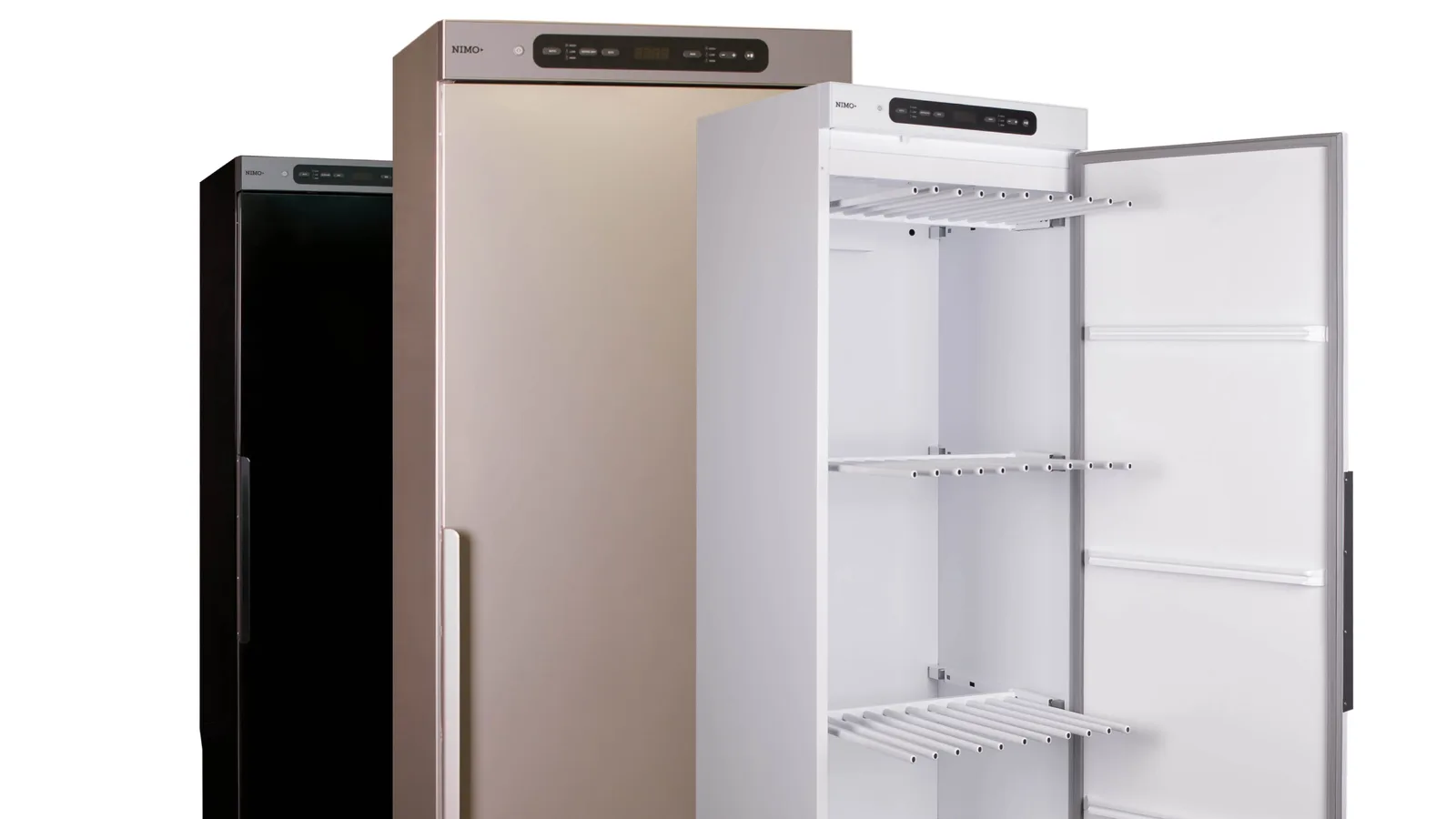
Even if you live alone, you dry a complete wash in a few hours and do not have to wait for dry weather. A half load only takes part of the electricity too: in the Passad 60, 4 kg uses 0.84 kWh. And when the cabinet is off, you simply use it as extra hanging space for coats or washing that needs a bit more airing.
Myth 10: wool, silk and other delicate fabrics cannot go in a drying cabinet
Not true. There is no fabric that cannot go in a drying cabinet. The washing hangs still and only warm air moves past it, so there is no friction. The lint in a tumble dryer is fabric wearing off your clothes. In a drying cabinet that does not happen.
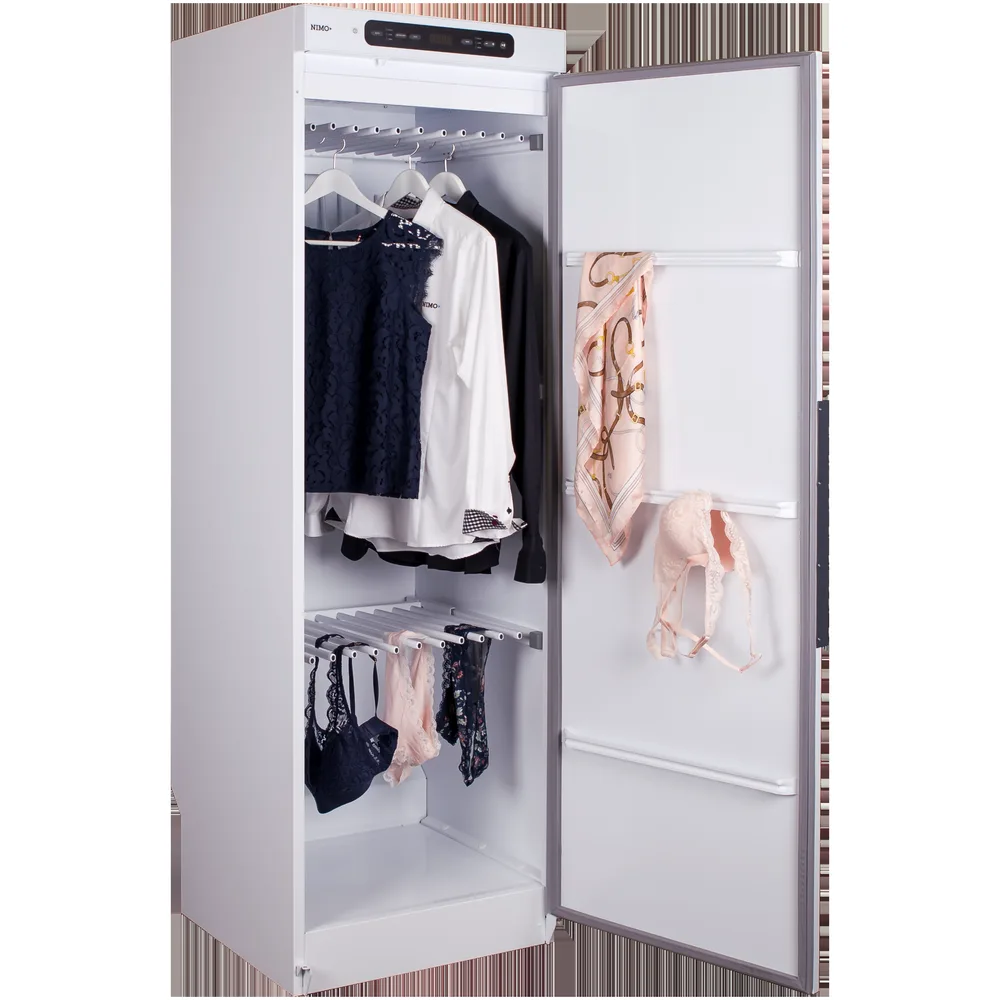
A fine wool jumper, silk blouse, hand knitting or embroidered table linen dries faster in a drying cabinet than on an airer and keeps its shape. The Passad 60 stays below 55 °C inside, so shirts and delicate fabrics can go in too.
Which drying cabinet suits you?
No vent nearby, or want the lowest energy use? Choose the NIMO Passad 60. At 45 dB it is also the quietest. If you already have a vent, the Solano DC 60 with a sensor or the Mistral DC 60 with a timer dries quickly and affordably. They have 2 kW of power and run at 55 dB. All NIMO drying cabinets are tested for more than 30,000 drying cycles.
Still torn between the two appliances? Read drying cabinet or tumble dryer. You can also compare all drying cabinets or the heat pump drying cabinets side by side.
NIMO drying cabinets
Passad 60 with a heat pump and no vent, Solano DC 60 with a sensor and Mistral DC 60 with a timer, both vented.
Most myths about the drying cabinet date back to the old cabinets at school. A modern drying cabinet is efficient, just as fast as a tumble dryer, gentle on your clothes and keeps the moisture out of your home. With a heat pump you do not even need a vent. Browse the NIMO drying cabinets and choose the cabinet that fits your space.
View the NIMO drying cabinets - Swedish drying cabinets with a heat pump, sensor or timer.
Frequently asked questions
- Does a drying cabinet use a lot of electricity?
- No, a modern drying cabinet is efficient. The NIMO Passad 60 with a heat pump dries 4 kg of washing with 0.84 kWh and a full 11 kg cabinet with 2.31 kWh. A tumble dryer uses about 1.40 kWh per cycle on average.
- How long does drying take in a drying cabinet?
- In the NIMO Passad 60, 4 kg of washing is dry in about 85 minutes and a full 11 kg cabinet in about 240 minutes. That is comparable with a tumble dryer, and the cabinet switches itself off when the washing is dry.
- Do you need a vent to the outside for a drying cabinet?
- Only with a vented drying cabinet, such as the Solano DC 60 or Mistral DC 60. A heat pump drying cabinet such as the Passad 60 works in a closed system and only needs a plug socket.
- Does a drying cabinet kill viruses?
- Research by the Swedish institute RISE from 2021 shows that the NIMO Mistral DC 60 inactivates viruses such as SARS-CoV-2 and norovirus in normal use. The conditions are a temperature of 55 °C or more and a drying time of more than 100 minutes.
- Do you have to wash at 60 degrees to get rid of dust mites?
- Not if you use a drying cabinet. Dust mites do not survive a dry, warm environment and die from dehydration. Wash your bedding at 40 degrees and then dry it in the drying cabinet. Without a drying cabinet you still need 60 degrees.
- Can you dry wool and silk in a drying cabinet?
- Yes. The washing hangs still and only warm air moves past the fabric, so there is no friction. That means wool, silk, hand-knitted jumpers and lace can all go in a drying cabinet.
- Does a drying cabinet make the room damp?
- No. A heat pump drying cabinet turns the moisture into water that goes into a tank or down the drain. A vented drying cabinet blows the humid air outside through a hose. Either way the moisture stays out of the room.