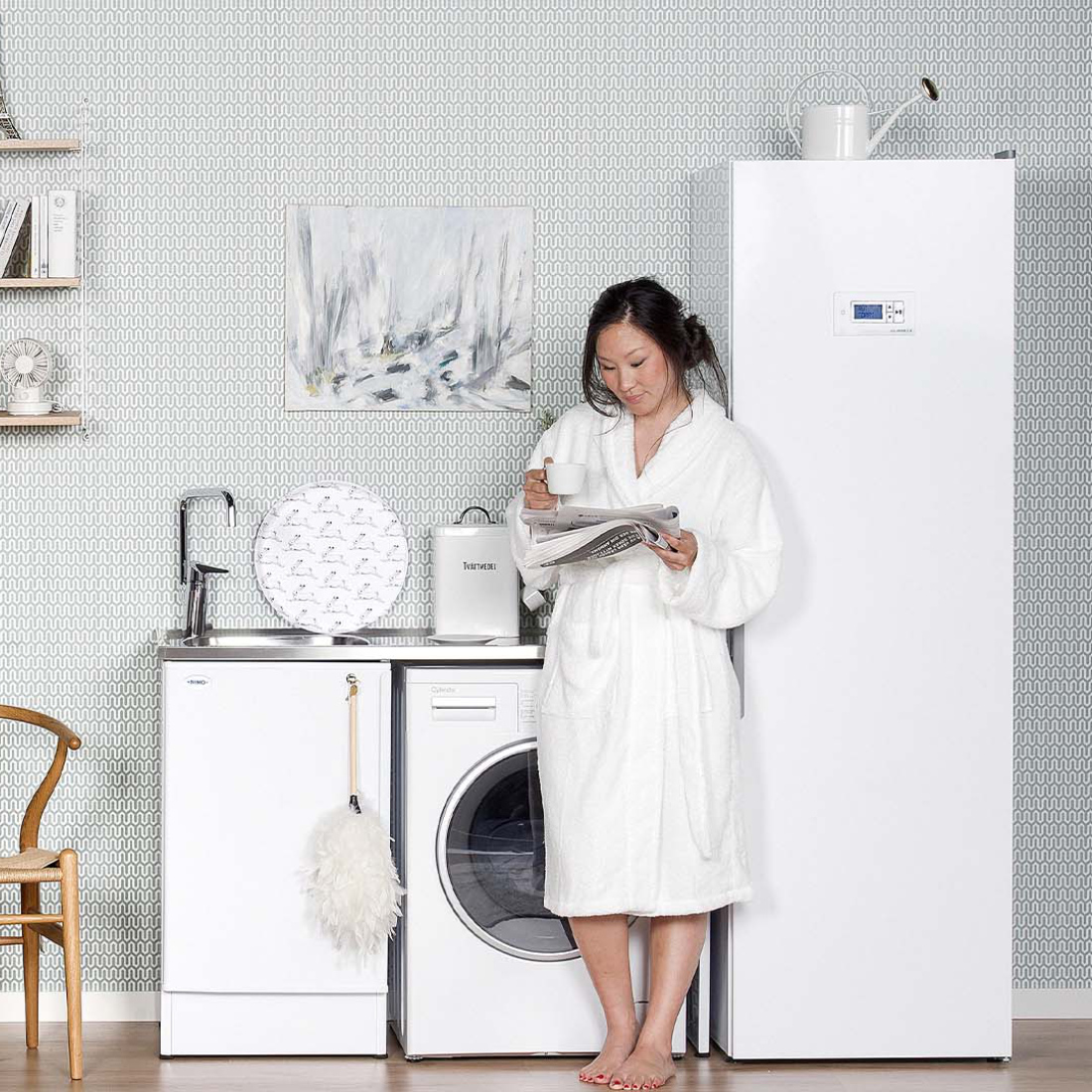
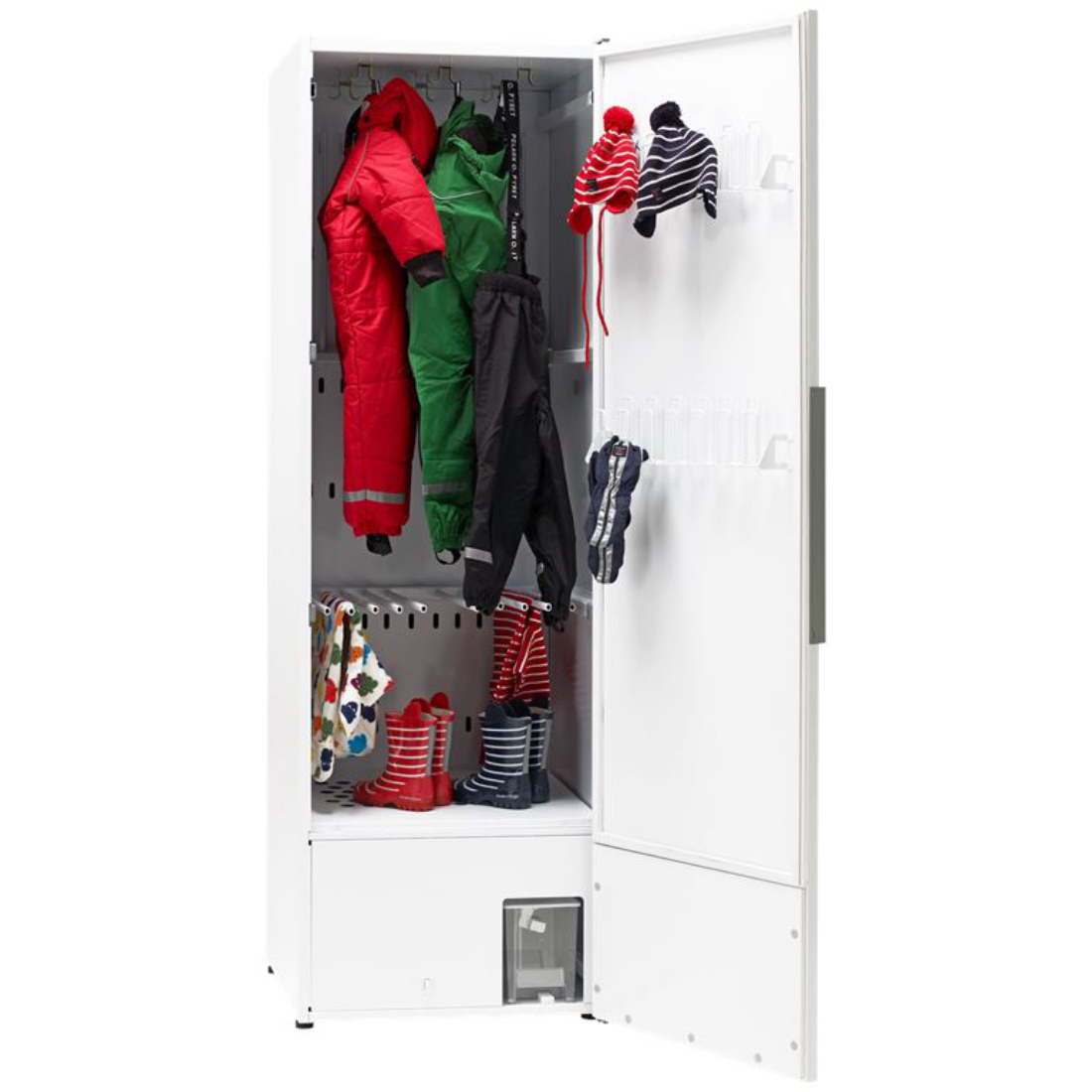
Drying clothes in winter often fails on the rack: it has stood in the living room for two days and the towels still feel clammy. That is physics, not bad luck - an average wash leaves 2 to 4 litres of water, and with the windows shut that moisture stays indoors. A drying cabinet (also called a drying cupboard or garment drying cabinet) takes that moisture out inside the cabin. That applies to the weekly wash, and to wet winter coats, ski suits and boots you do not want dripping in the hallway for days.
Why does an indoor drying rack not work in winter?
Cold outdoor air holds little moisture by nature. Warm indoor air can take up a lot of water, but only if you refresh that air. Leave the windows shut and the room air saturates: laundry barely evaporates and humidity climbs past 60%, the point where mould on walls and frames becomes a real risk.
That is why a load that dries indoors in a day in summer can stay clammy for 2 to 3 days in winter. The longer fabric stays damp, the greater the chance of a musty smell - and of condensation on windows in smaller homes.
What if you still air the room every hour?
For indoor drying people often advise about ten minutes of airing every hour, so humid air can leave. In winter that means throwing heat out each time. Over a year the extra heating can cancel the "free" drying on a rack, especially if you hang a load almost every day.
A drying cabinet when the windows have to stay shut
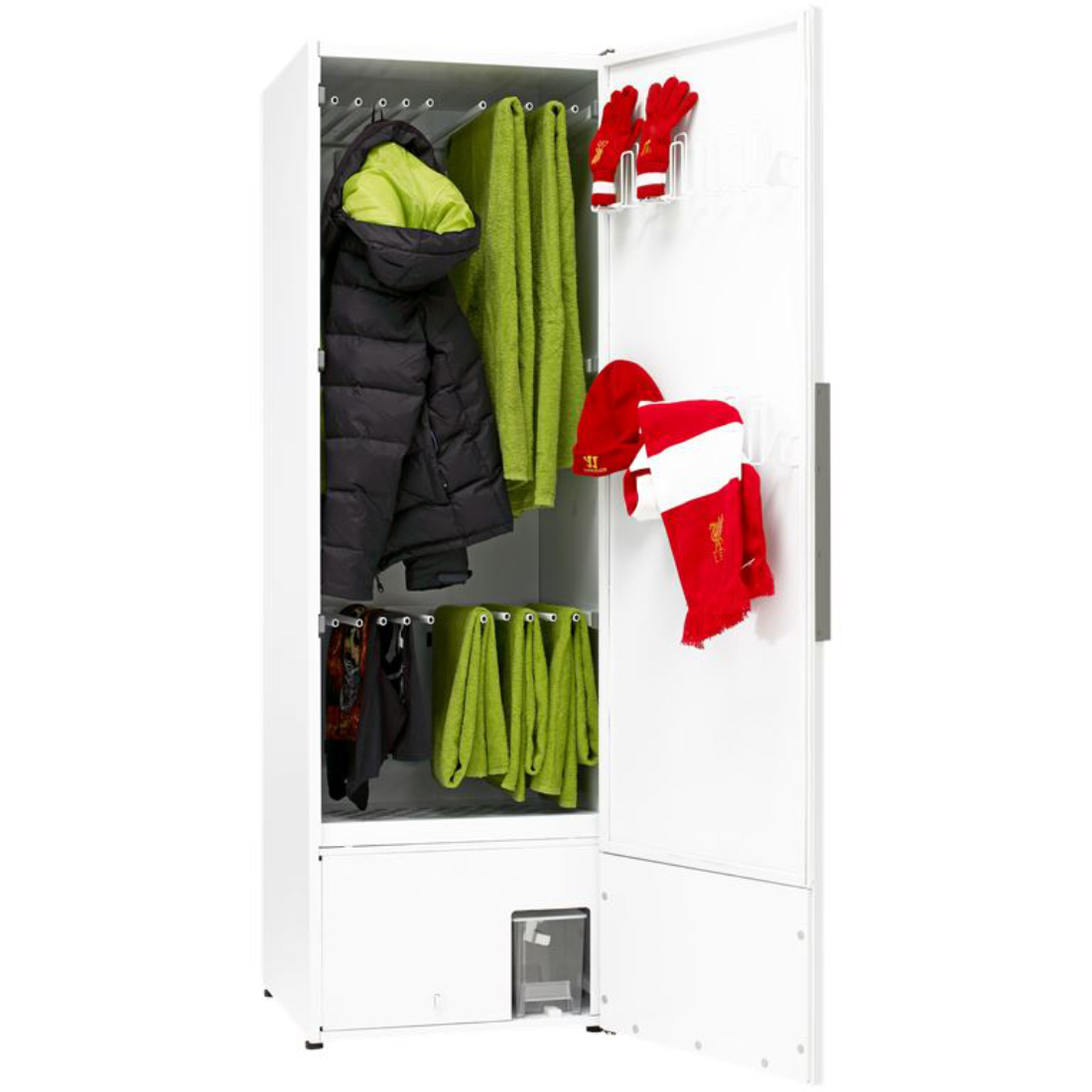
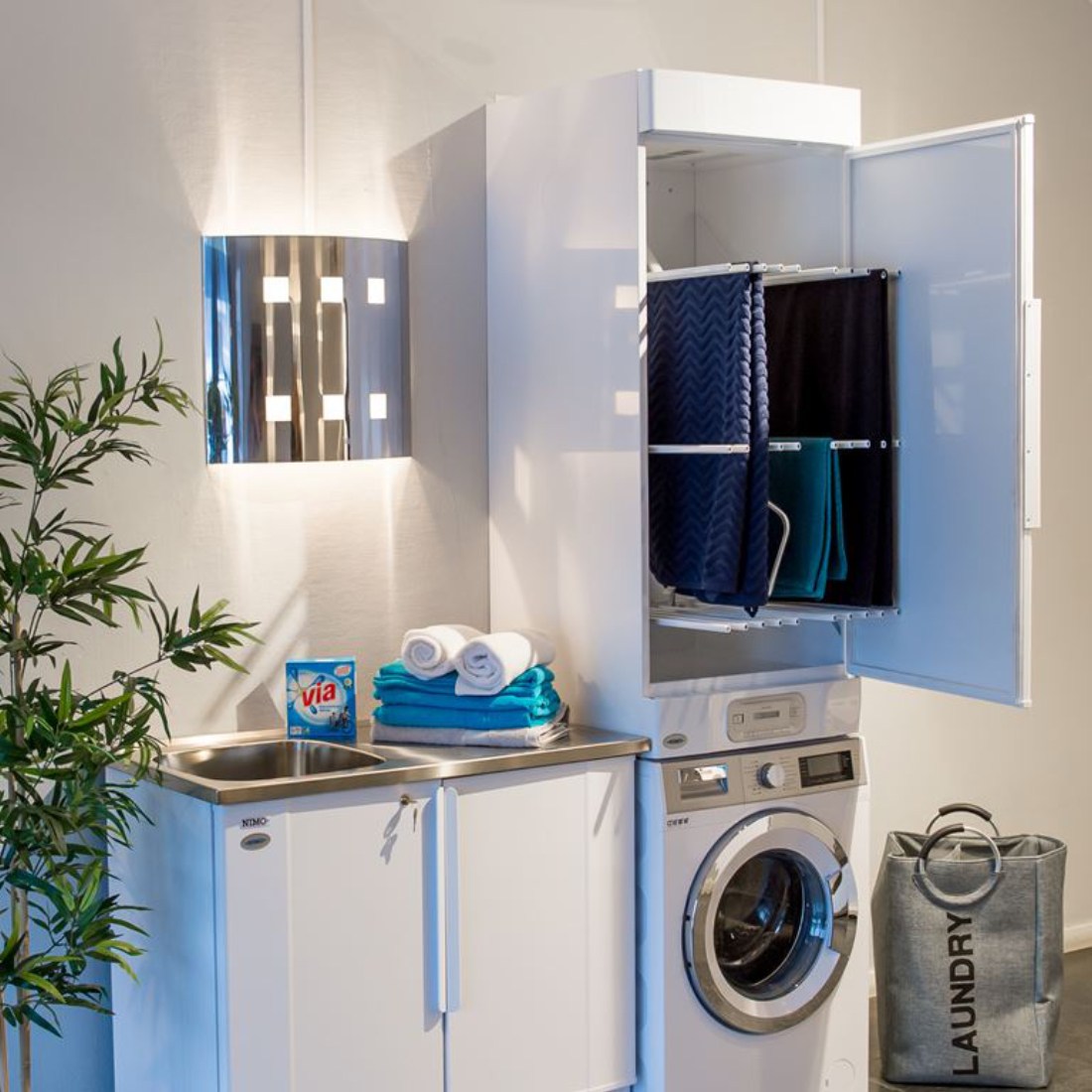
A drying cabinet hangs the laundry in a nearly closed cabin. Warm air circulates around the fabric and takes the moisture away in a controlled way, internally via a heat pump or condenser, or through a hose to the outside. You do not need an open window, so the heat stays in the house. Search queries such as drying cabinets for clothes or cabinet clothes dryer point to this appliance, not a tumble dryer.
- Faster dry - a few hours instead of days on the rack
- No windows open - you are not heating the street
- Less mould risk - moisture leaves the living room, including in an apartment
- Gentler on fabric than a tumble dryer: clothes hang still, so less wear and crease
- Winter kit too - coats, ski suits, hats and boots that must not go in a drum
Drying cabinet vs. indoor rack in winter
On the rack, winter laundry hangs 24 to 72 hours, depending on temperature and humidity. A drying cabinet does the same load in about 1.5 to 3 hours, without airing or turning the thermostat up.
| Indoor drying rack | Drying cabinet | |
|---|---|---|
| Drying time in winter | 24 to 72 hours | about 1.5 to 3 hours |
| Windows open | Often needed, or it will not dry | Not needed |
| Moisture in the house | Stays in the room where the rack stands | Extracted inside the cabinet |
| Winter coats and boots | Awkward, take a lot of space and stay clammy | Hang or stand in the cabinet, dry in hours |
| Place in the home | Living room, hallway or bedroom | Laundry room or utility, door closed |
Which drying cabinet fits winter use?
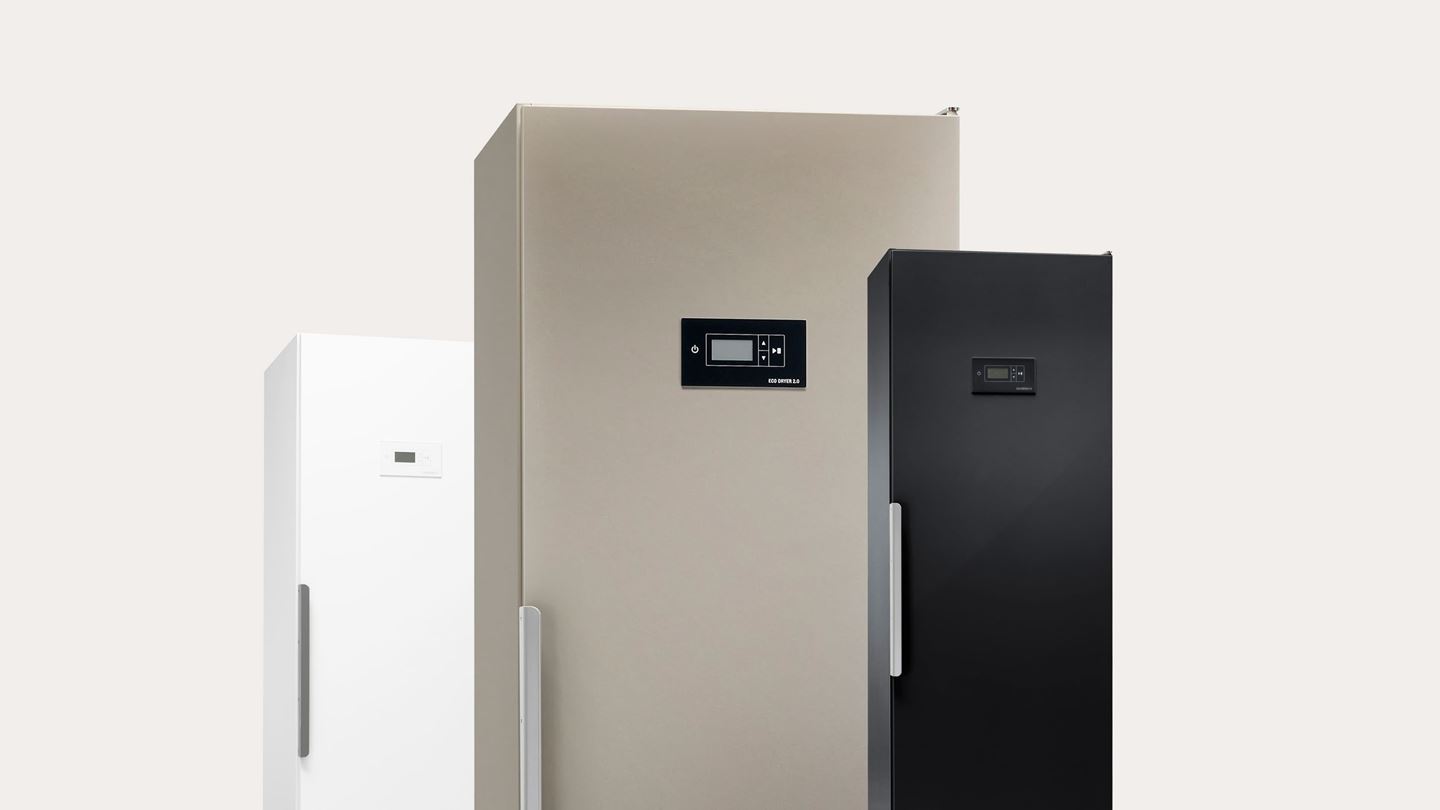
In winter you dry more often. A NIMO heat-pump drying cabinet is then usually the practical choice: no extra hole in the facade (avoid cold draughts) and 30 to 50% less electricity than a condenser model. If you already have an exhaust to the outside, a vented drying cabinet is the simpler starter.
Many NIMO models stop automatically when the sensor measures the load as dry. That helps in winter, when you run an extra load more often and the cabinet would otherwise keep heating for nothing.
Is a drying cabinet more expensive than airing?
Not necessarily. A heat-pump cabinet uses less power than an older condenser, and you do not air every hour while the heating warms the room again. For households that dry almost daily in the heating season, losing a steamy living room often weighs more than the kilowatt-hour price alone. If you mainly want to compare types, read what a drying cabinet is and which types there are.
NIMO drying cabinets used a lot in winter
Passad 60 cm heat pump: no exhaust outside. Solano with sensor stops when the laundry is dry.
Browse all drying cabinets - Heat pump, vented and sensor models from NIMO. Free delivery in the Benelux.
A rack that will not dry in winter is physics, not bad luck: closed windows keep the moisture in. Airing helps, but costs heat. A drying cabinet dries the load in hours, including coats and ski suits, without raising humidity in the house. In pollen season the same idea applies: dry without pollen from outside. XARO is the exclusive NIMO importer for the Benelux.